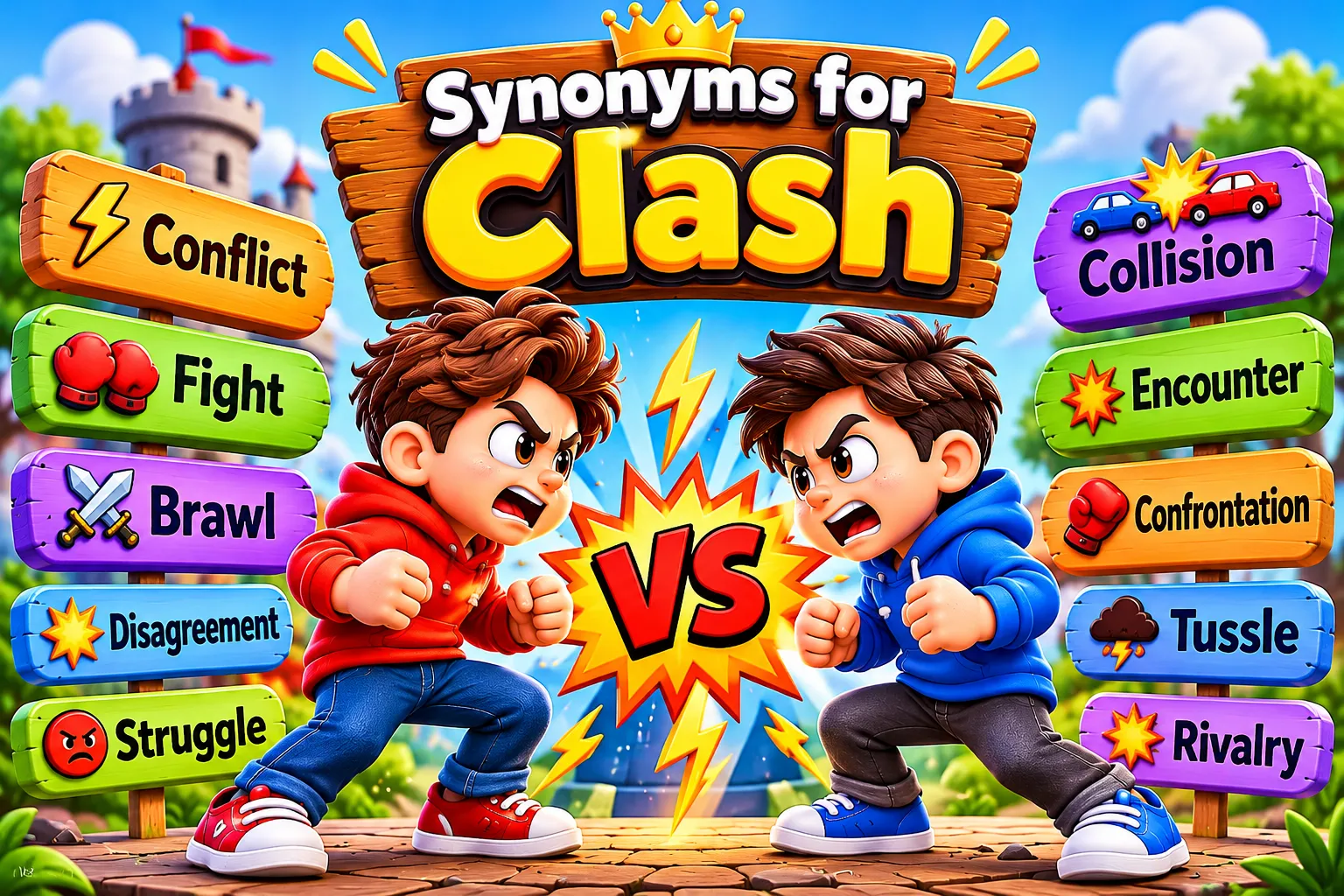
Synonyms for clash include conflict, disagreement, dispute, collision, confrontation, argument, altercation, quarrel, fight, friction, discord, opposition, feud, struggle, tension, and antagonism. These words describe disagreements, conflicts, physical impacts, or opposing ideas.
A clash happens when two people, ideas, or things come into conflict. For example, two friends may clash because they have different opinions. A clash can also happen when two events take place at the same time. The word is common in daily conversations, news, and writing.
Learning synonyms for clash helps English learners express conflict in different ways. Content writers can also use these words to make their writing clear and avoid repetition. Words such as conflict, disagreement, and collision have similar meanings, but each fits a different situation.
In this article, we will explore the meaning of clash, its synonyms, examples, grammar, pronunciation, history, and semantic categories. These simple explanations will help you use the right word in speaking and writing.
Meaning of Clash
Definition
Clash (Noun/Verb):
- Noun: A strong disagreement, conflict, or collision between people or things.
- Verb: To come into conflict, disagree strongly, or hit against something.
Examples
- The two leaders had a clash over the new rules.
- Their opinions often clash during meetings.
Connotative Meaning
- Positive tone: May suggest a bold mix of styles or colors, such as a creative clash of designs.
- Negative tone: Often suggests conflict, disagreement, or tension.
- Neutral tone: Describes a collision, difference, or overlap between events.
(Connotation: The feelings or ideas connected to a word beyond its basic meaning.)
Etymology
The word clash is believed to have an imitative origin, linked to the sound of objects striking together.
| Period | Word Origin | Meaning and Development |
| Old English (450–1100) | No direct Old English form is known. | Similar ideas were expressed through words related to striking, fighting, or conflict. |
| Middle English (1100–1500) | Clash | The word entered English, likely from an imitative source, describing a loud striking sound. |
| Modern English (1500–Present) | Clash | The meaning expanded to include disagreements, conflicts, collisions, and differences in style or ideas. |
Pronunciation (IPA)
- IPA: /klæʃ/
- Syllables: Clash (1 syllable)
Affixation Pattern of Clash
- Root: Clash
- Prefix: None
- Suffix: -es, -ed, -ing (used in different grammatical forms)
Word Formations
- Clash (Noun): A conflict or disagreement.
- Clash (Verb): To disagree or collide.
- Clashes (Plural Noun): More than one conflict.
- Clashes (Verb): Third-person singular form of clash.
- Clashed (Verb): Past tense of clash.
- Clashing (Verb/Adjective): Conflicting or disagreeing.
- Clashingly (Adverb): In a conflicting or discordant manner (rare).
27 Synonyms of Clash With Meaning & Examples
1. Conflict (Noun/Verb)
Meaning: A serious disagreement or struggle between people or groups.
Examples:
- The conflict between the teams grew stronger.
- Their goals conflict with each other.
2. Disagreement (Noun)
Meaning: A situation in which people have different opinions.
Examples:
- The two friends had a disagreement.
- A disagreement arose during the meeting.
3. Collision (Noun)
Meaning: An act of two objects hitting each other.
Examples:
- The collision damaged both cars.
- A collision occurred at the busy crossing.
4. Confrontation (Noun)
Meaning: A direct meeting involving anger or conflict.
Examples:
- The confrontation between the neighbors was tense.
- She avoided a confrontation with her boss.
5. Dispute (Noun/Verb)
Meaning: A disagreement about an issue or fact.
Examples:
- The workers had a dispute over pay.
- They dispute the results of the report.
6. Altercation (Noun)
Meaning: A short and angry argument between people.
Examples:
- An altercation broke out outside the store.
- The two men had a heated altercation.
7. Argument (Noun)
Meaning: A disagreement in which people express opposing views.
Examples:
- Their argument lasted for an hour.
- The argument began over a small mistake.
8. Fight (Noun/Verb)
Meaning: A struggle or disagreement between people.
Examples:
- The brothers had a fight.
- They fight over different opinions.
9. Struggle (Noun/Verb)
Meaning: A difficult effort or conflict.
Examples:
- The group faced a struggle for power.
- The two sides struggle to reach an agreement.
10. Opposition (Noun)
Meaning: Resistance to a person, idea, or action.
Examples:
- The plan faced strong opposition.
- Opposition grew against the new rule.
11. Friction (Noun)
Meaning: Tension or disagreement between people or groups.
Examples:
- There was friction between the two departments.
- Their different views caused friction.
12. Discord (Noun)
Meaning: A lack of agreement or harmony.
Examples:
- Discord spread among the team members.
- The debate created discord in the group.
13. Feud (Noun/Verb)
Meaning: A long and bitter disagreement.
Examples:
- The families had a long feud.
- The two leaders feud over land.
14. Tiff (Noun)
Meaning: A small or minor argument.
Examples:
- The couple had a little tiff.
- Their tiff ended after an apology.
15. Quarrel (Noun/Verb)
Meaning: An angry disagreement between people.
Examples:
- The neighbors had a quarrel.
- They quarrel about money often.
16. Row (Noun)
Meaning: A noisy or angry argument, especially in British English.
Examples:
- The couple had a row last night.
- A row broke out at the meeting.
17. Contest (Noun/Verb)
Meaning: A struggle or competition between opposing sides.
Examples:
- The election became a close contest.
- The teams contest the final match.
18. Battle (Noun/Verb)
Meaning: A serious fight or struggle.
Examples:
- The two groups faced a battle over resources.
- They battle for control of the company.
19. Tension (Noun)
Meaning: A feeling of stress or conflict between people.
Examples:
- Tension rose during the discussion.
- There was tension between the two rivals.
20. Incompatibility (Noun)
Meaning: The state of being unable to work or exist well together.
Examples:
- Their incompatibility caused problems.
- The styles showed clear incompatibility.
21. Contradiction (Noun)
Meaning: A difference between ideas or statements that cannot both be true.
Examples:
- His words created a contradiction.
- The report contains a contradiction.
22. Contradict (Verb)
Meaning: To say the opposite of what someone else says.
Examples:
- Her statement contradicts his claim.
- The facts contradict the rumor.
23. Compete (Verb)
Meaning: To try to win against another person or group.
Examples:
- The two companies compete for customers.
- The teams compete for the trophy.
24. Butt Heads (Verb Phrase)
Meaning: To disagree strongly with someone.
Examples:
- The managers often butt heads.
- They butt heads over business decisions.
25. Cross Swords (Verb Phrase)
Meaning: To argue or disagree strongly.
Examples:
- The politicians crossed swords during the debate.
- They crossed swords over the proposal.
26. Run-In (Noun)
Meaning: A brief and unpleasant disagreement or encounter.
Examples:
- He had a run-in with his neighbor.
- Their run-in caused further tension.
27. Clashing (Adjective)
Meaning: Showing strong differences or a lack of harmony.
Examples:
- The room had clashing colors.
- Their clashing opinions caused problems.
Prototype Meaning
The typical meaning of clash is a strong disagreement, conflict, or collision between two people, groups, ideas, or objects. When people hear this word, they often imagine an argument, a fight, or two things that do not fit well together. For example, two people may clash because they have different beliefs, or two cars may clash in a collision. The word can also describe events that happen at the same time or colors that do not look good together.
Prototype Categorization
The 27 synonyms of clash can be grouped into meaningful semantic categories. These groups help writers choose the right word for each situation.
| Semantic Category | Synonyms | Description |
| Disagreement and Arguments | Disagreement, dispute, argument, quarrel, altercation, row, tiff | Describe verbal conflicts and differences of opinion. |
| Physical Conflict and Fighting | Collision, fight, battle, struggle, confrontation | Refer to physical contact, fighting, or serious struggles. |
| Tension and Hostility | Friction, discord, tension, antagonism, feud | Describe strained relationships and ongoing hostility. |
| Opposition and Competition | Opposition, contest, compete, contradict | Focus on resistance, rivalry, or opposing views. |
| Differences and Lack of Harmony | Incompatibility, contradiction, discordance, clashing | Describe ideas, styles, or things that do not fit together. |
| Informal Expressions of Conflict | Butt heads, cross swords, run-in, collision course | Provide informal or figurative ways to express conflict. |
This categorization helps writers avoid repetition and select a word that matches the intended meaning. For example, altercation is suitable for an angry argument, while collision describes a physical impact. Friction works well when discussing tension between people.
Antonyms of Clash
- Agreement (Noun): A shared opinion or understanding.
- Harmony (Noun): A state of peace and agreement.
- Cooperation (Noun): The act of working together.
- Peace (Noun): A state without conflict or fighting.
Short Questions and Answers
What does clash mean?
Clash means to disagree strongly, come into conflict, or hit against something.
When should clash be used?
Use clash when describing disagreements, collisions, opposing ideas, or events that happen at the same time.
Is clash positive or negative?
Clash usually has a negative tone when it describes conflict. However, it can be neutral when describing a difference in styles or schedules.
How is clash different from similar words?
Clash is a broad term for conflict or disagreement. Quarrel usually means an angry argument, collision refers to physical impact, and dispute often describes a disagreement about a specific issue.
Conclusion
Learning the word clash and its synonyms can improve your English vocabulary and help you express conflict in different ways. Words such as conflict, disagreement, collision, and friction have related meanings, but each fits a different situation. Understanding these differences can make your writing clearer and more engaging.
Synonyms also help you avoid repetition in essays, articles, and everyday conversations. They allow you to describe arguments, physical impacts, and opposing ideas with greater accuracy. English learners can build confidence by practicing these words in simple sentences.
Try learning a few synonyms each day and using them in your speaking and writing. Regular practice will help you improve your vocabulary and communicate your thoughts more effectively.
Read More:
Synonyms for Life Skills: 23 Useful Alternatives to Know

I’m Falak Naaz, an SEO writer at SameSynonyms.com with 10 years of experience creating clear, engaging, and search-friendly English content. I specialize in synonyms, antonyms, vocabulary, and word usage. Through careful research and practical examples, I help readers choose the right words and improve their English with confidence.
1 thought on “Synonyms for Clash: 27 Strong Alternatives to Use”